
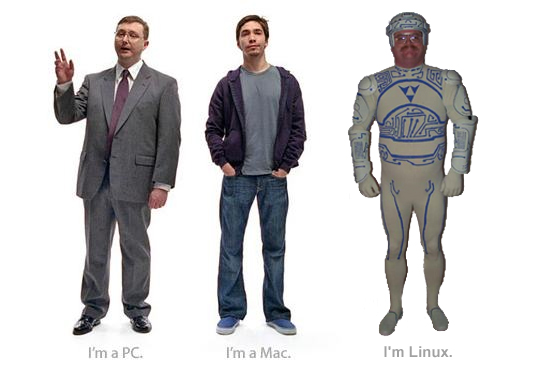
Thankfully, the insidious rivalry commercials produced by Mac and PC camps that depicted people claiming either "I'm a Mac" or "I'm a PC" have all but vanished probably since the introduction of Intel-based Macs in 2006 blurs the distinction. I always found the notion that we are what we compute with irksome. Perhaps we humans have gotten lost in the notion that all of our productive power must be augmented by computers and technology. But, personally, I'm uncomfortable with my ever-shrinking capacity to remember phone numbers and appointments without reminders from my phone or email interface.
 My first computer was built to play games on it, and it didn't come with an OS; I had to install Qbasic just to get limited functionality. Even then, I had to learn how to make the thing do what I want, which was basically running command lines in DOS to find and run executables. I grew out of any need to play video games on my thousand-dollar 486 pretty quickly because going outside was still a prettier and more immediately-gratifying option that staring at a 24 dot pitch monitor running 8-bit graphics.
Eventually, I was so heavily involved in music, I barely touched the keyboard. Instead I got lost in making music with friends as loud as possible without police intervention, and this was enough. In fact this was plenty and exciting, and practice made for hours of socialization and camaraderie - if not perfect.
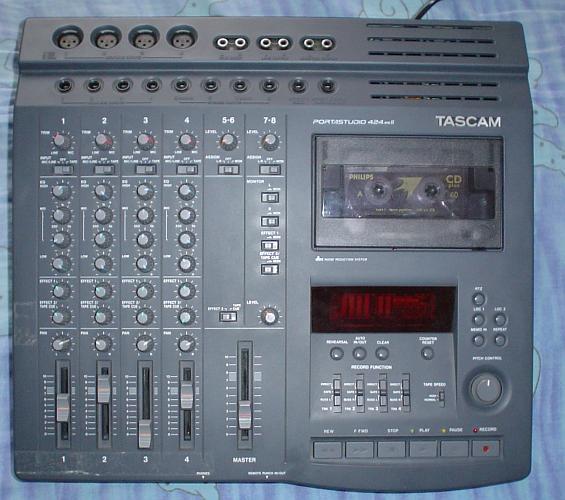
Hello again, computer!
If you use a PC in your recording environment, surely you've come across Mac users who question your intelligence. I've heard a ton of remarks that imply that there is no way to be a professional recording engineer and use a PC because Macs don't hiccup, work perfectly, are more intuitive, never get viruses, have excellent compatibility with high-end gear, etc. I'm sure that pc-using graphic designers have heard the same things. That being said, when these folks brought in their Macs to my studio there would be hiccups in performance - nothing major, but very similar to my own experience with my PC setup. Therefore, I was never particularly motivated to make such an expensive investment.
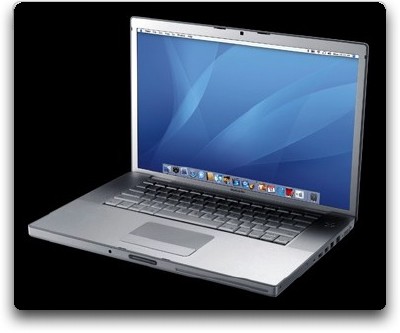

I want to take a time-out to comment that paying over $1000 for a laptop should carry with it some golden protection plan that if your machine dies for any fault of manufacture it will be fixed or replaced, because it is absurd that such an investment comes with such risk. Apple's answer was a recall that protected the machines that were within the original warranty. Ideally, expensive devices like this work like they are supposed to and don't have major flaws in design - that's why a person pays so much more than a lower-cost model. My better half has an HP laptop that she paid nearly the same price for as a comparable Macbook and it has worked flawlessly for six or seven years. My $1000 Fujitsu tablet issued by the same job had no issues after 5 years of heavy use and, to my knowledge, is still going strong. Also, when a PC desktop (perhaps a Mac-based tower as well) suffers a catastrophe, any of the internal components can be replaced or upgraded for a very manageable cost, and you're up and running as long as you were performing regular backups.
When it worked, the 2007 Macbook Pro was a brilliant machine that was extremely well engineered, extremely predictable in function, and beautiful in ergonomics - but it broke. So, in the familiar words of the band Fugazi's Merchandise, my contribution to the Mac vs PC debate is this: "You are not what you own." Instead, both Macs and PCs are machines that present a mirror of their makers, an elegantly made, yet flawed, piece of circuitry.

No comments:
Post a Comment